
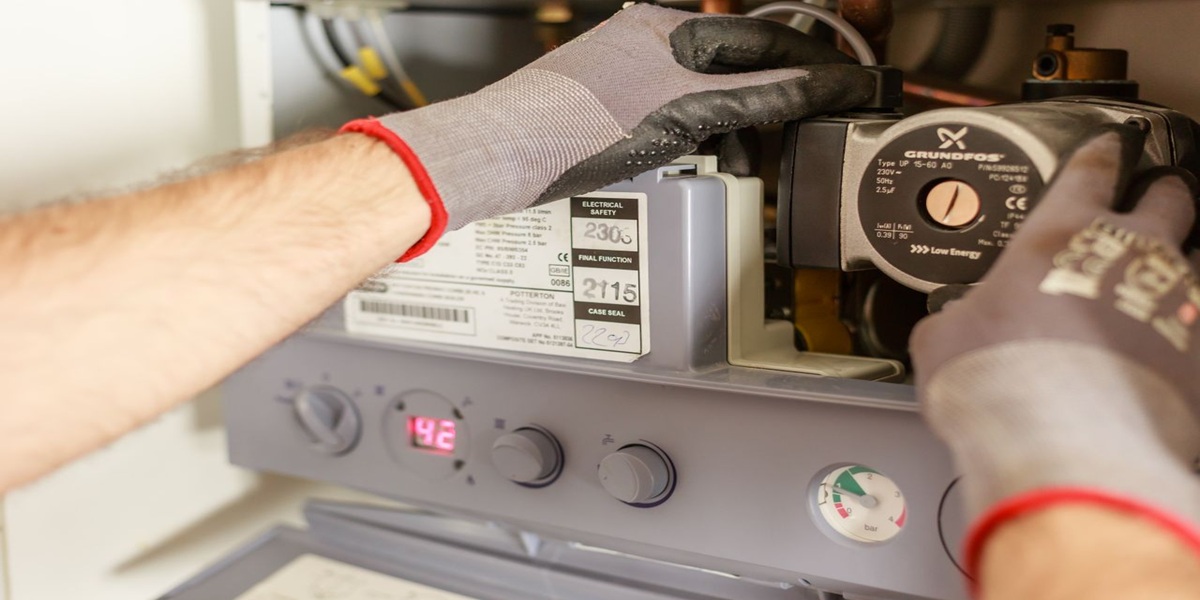
If your boiler suddenly stops working, standard UK home insurance usually won’t pay to fix a mechanical fault or a part that has worn out. Buildings insurance may cover damage to the boiler caused by an insured event such as a fire or flood. If the boiler has simply broken down, check whether you have home emergency cover, a separate boiler policy or a manufacturer’s warranty.
When does home insurance cover a boiler?
The cause of the damage matters. If a fire damages your boiler, the boiler may form part of your buildings insurance claim. If the boiler’s pump fails through normal use, the repair would usually fall outside standard buildings cover. Check the insured events and exclusions in your policy wording. Aviva’s guide to boiler cover
A leak can involve two separate costs. Say a pipe near the boiler leaks and damages the ceiling below. Buildings insurance may cover the ceiling repair under escape-of-water cover, subject to the policy terms and excess. The cost of fixing the failed pipe or boiler component is a separate question. Ask the insurer to confirm which costs it will consider before you approve the work.
What does home emergency cover pay for?
Home emergency cover may be included with your home insurance or sold as an optional extra. If it includes boiler breakdowns, the provider may arrange an engineer and pay for call-out, labour and parts up to the policy limit. Some policies require a complete loss of heating or hot water before they’ll treat the fault as an emergency. Aviva’s guide to home emergency cover
Before making a claim, check:
- What counts as a breakdown. A boiler that has stopped completely may qualify, while intermittent faults may be treated differently.
- Whether your boiler is eligible. The policy may set limits on its age or type, or ask for evidence of servicing.
- How much the policy pays. Check the claim limit, any excess and whether there’s a contribution towards a replacement if the boiler can’t be repaired.
- Who can do the work. The provider may require you to use its own engineer or get authorisation before arranging a repair yourself.
What should you do when your boiler breaks down?
- Check your policy schedule and warranty. Look for home emergency cover, boiler breakdown cover and any separate manufacturer’s warranty. The schedule tells you which extras you actually bought.
- Call the provider before booking an engineer if you intend to claim. Explain what has stopped working and give them any fault code shown on the display. Ask who should attend, what the provider will pay and whether you need a claim reference.
- Keep a record. Save the engineer’s diagnosis, itemised invoice and photos of any water damage. The diagnosis can help the insurer distinguish the boiler fault from any damage it caused elsewhere in the property.
If you’re arranging the repair privately in London, London Property Services provides emergency boiler repairs through Gas Safe registered engineers. Ask what the initial visit includes and whether the engineer can provide a written diagnosis.
If you smell gas, leave the property and call the National Gas Emergency Service on 0800 111 999 from outside. Deal with the immediate safety issue before calling your insurer.
Can I claim for a new boiler?
It depends on why the boiler needs replacing and what the policy promises. If an insured event damages it beyond repair, replacement may be considered under a buildings claim. If it has failed through age or use, check your boiler breakdown terms. Some policies provide a capped contribution towards a new boiler, which can leave you paying the balance.
What if I rent my home?
Report the breakdown promptly to your landlord or letting agent and use their emergency contact if you have one. For a boiler supplied with the property, the landlord is generally responsible for arranging repairs. If you’ve lost both heating and hot water, tell them when the fault started and whether anyone in the household is particularly vulnerable to the cold.