

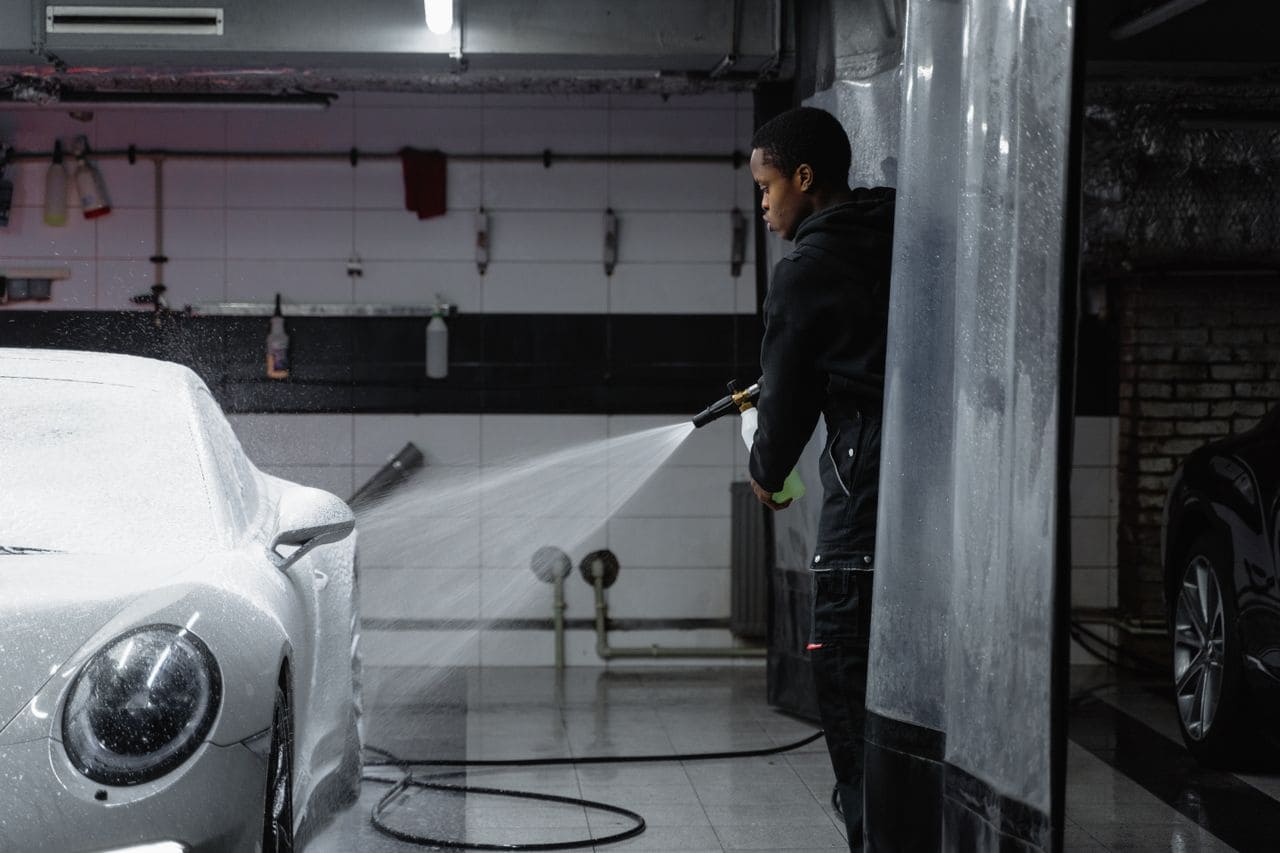
Most cars need a wash far more often than they need a deep clean. Choosing between a mini valet and a full valet starts with one question: does your car need a wash, or a reset? The two services sound similar, but their prices are very different.
Answer it well and you pay only for work the car actually needs. Answer it badly and you either waste money shampooing a cabin that was already fine, or leave ground-in dirt in place until it becomes a permanent stain. Package names vary between providers, so judge the car first and the package list second.
What a mini valet usually covers
A mini valet is the maintenance tier. Most packages include an exterior hand wash, wheel and tyre cleaning, door shuts wiped down, windows polished and light finishing such as tyre dressing. Some providers add a quick interior tidy, so read the package list before you book.
Door shuts are the painted edges you only see with the door open, and they collect grime that a quick rinse misses. Wheels get dedicated products because brake dust bonds to alloy and ordinary shampoo barely touches it. A tyre dressing and a final glass polish leave the car looking properly done.
The hand wash itself is worth paying for. A professional works with clean mitts and fresh water, so grit stays off the paint. Brushes in some automatic washes carry dirt left by the cars before yours, and that grit leaves swirl marks: fine scratches that show when sunlight hits the hood.
Swirl marks sit in the clear coat, the tough transparent layer that protects automotive paint.
For a car in decent shape, this tier keeps the exterior in good order between deeper cleans. The visit is short, which makes it easier to keep up regularly.
What a full valet adds
A full valet takes the same exterior work and adds serious time inside the cabin. The valeter vacuums the seats, carpets, trunk and door pockets, then wipes down the dashboard, centre console, door panels and interior glass. The trunk gets the same attention, including the spare wheel well on a thorough job. After that comes the deep cleaning.
Inside the cabin
Fabric seats and carpets get shampooed or steam cleaned. Steam cleaning pushes hot vapour into the fibres, loosening compacted dirt so it can be extracted. Shampooing works a cleaning solution into the fabric to lift stains and the smells that come with spilled food, mud, wet dogs and damp coats. The shampoo stage usually ends with a wet extraction, which pulls the dirty water back out so the fabric dries faster.
Smells are stubborn because they can settle in the headliner, the fabric lining the roof, and in the seat foam, where surface wiping cannot reach them. Describe any lingering odour when booking so the operator can identify the source and choose a treatment that fits the materials.
Family cars add another layer. Child seats trap crumbs and spilled milk underneath, and a thorough valeter lifts them out to clean beneath.
Leather seats get cleaned and conditioned. The conditioner keeps the material supple, and supple leather is less likely to dry out and crack.
On the paint
Many full valets finish with a wax or a paint sealant. Both add a sacrificial layer over the clear coat, so dirt sticks to that layer first and the next wash removes it more easily. If the car lives outside, that protection is especially useful through winter.
All of this takes much longer than a mini valet, and the price reflects the labour. You are paying for a cabin reset and exterior protection in one visit.
A two-minute check before you book
The decision takes about two minutes. Walk around the car and look at the paint and wheels. Then open a door and judge the cabin as a stranger would.
Be thorough. Check the trunk, glove box, under the seats and door pockets, because dirt collects out of sight.
If the cabin presents well and only the outside looks dirty, book a mini valet. If you find stains, hair, dull trim or a smell you would not want passengers to notice, book the full valet. That settles most bookings.
Once you know which package you need, spend five minutes on the booking itself. Read the package list on the provider’s page so you know exactly what is included, and favour providers who itemise everything. Check recent customer reviews, and confirm the valeter is insured before anyone works on your car.
Mobile valeting makes the whole thing easier to keep up. The valeter travels to your home or workplace, so there is no line at the gas station and no Saturday lost to a wash bay. While you compare package descriptions, the clean me page is one you can consult alongside the rest.
When a mini valet is the right call
The case for a mini is often chemical. Bird droppings and tree sap are acidic, and left on a panel they can etch into the clear coat. Road tar bonds to the lower panels, and brake dust is made of tiny metallic particles that cling to alloy wheels and mark the finish if they sit.
Some triggers should not wait for the routine. Bird mess on the hood deserves a prompt wash, because the longer it bakes on, the deeper it can mark the lacquer. The same goes for sap after parking under trees and tar after fresh road work. Winter road salt sits on the lower panels and wheel arches, and it is worth washing off promptly.
Prompt removal keeps the clear coat intact, which keeps the coloured paint underneath looking right. If contaminants stay on the surface, a wash can eventually turn into a repair. That keeps the bill small now and prevents a larger repair later.
How often you need a mini depends on how the car lives. A daily driver parked on the street picks up grime in every season, so a wash every few weeks keeps the surface safe. A low-mileage weekend car kept in a garage can go much longer between visits.
If the cabin still looks and smells clean, the interior work in a full valet buys you nothing. Book the mini.
When a full valet is worth the money
The full valet earns its price when the interior has real problems. Think visible stains on the seats, pet hair worked into the carpet, sticky cup holders and smells that outlast any air freshener. A quick tidy will not shift those, but shampoo and steam usually can.
Dog owners already know where they stand. Hair works into carpet weave and seat seams, and no handheld vacuum gets all of it. Smoke smell is the hardest test of all: it soaks into every fabric surface, and shifting it usually takes the full shampoo-and-steam approach across the whole cabin.
Ordinary use creates the same buildup over time. A year of school runs, dog hair, spilled drinks and sports gear leaves dirt you do not fully see until it is extracted. If the cabin has not had proper attention in a long while, assume it needs the deeper package.
A full valet is also standard prep when a car changes hands. If you are selling, or handing back a leased car at the end of the term, the cabin will be inspected and judged. A deep clean presents the car at its best.
Buying a used car is another clear case. You do not know how the last owner treated the cabin, and a full valet gives you a clean baseline before you start maintaining it yourself. The same goes for a one-off mess, such as the muddy camping trip or renovation run that overwhelms a home vacuum.
The full package can still be overkill. Booking it out of habit, when the cabin is genuinely clean, pays for hours of labour you will never notice.
Many providers also list interior-only packages. If the exterior is fine and only the cabin needs work, they can cost less than the full treatment.
How the costs compare over time
Prices vary by provider, and by the size and condition of the car, so compare locally. When you compare, line the package lists up side by side, because the same name can cover different work. The basic spending logic is the same everywhere.
A mini valet costs less, and regular minis stop dirt from bonding, so each visit stays quick. As a rough guide, a daily driver benefits from a mini every few weeks, with a full valet a couple of times a year. Street parking under trees, winter roads, kids and a dog all pull those dates closer. A garaged second car can push them further apart.
Skip washes for months and contaminants harden on the surface, so the next clean takes longer and costs more. Keeping up routine cleaning means each visit has less to shift, which keeps the work and the bill down. An existing scratch, worn surface or stubborn stain is another matter, and a valet will not necessarily resolve it.
The full valet costs more, but it is an occasional expense. When the cabin genuinely needs it, the service resets the car so mini valets can maintain it again. If booked out of habit, it pays for labour that may not show.
When a car is about to be sold or returned, the calculation changes again. A full valet is the version that makes sense there, because a clean cabin and glossy paint shape the first impression a buyer or inspector forms. The car should look cared for on the day it is judged.
Start with the two-minute check this weekend. Match the package to what you find, and read the provider’s list before you pay. Book the next visit while the car is still easy to clean.