
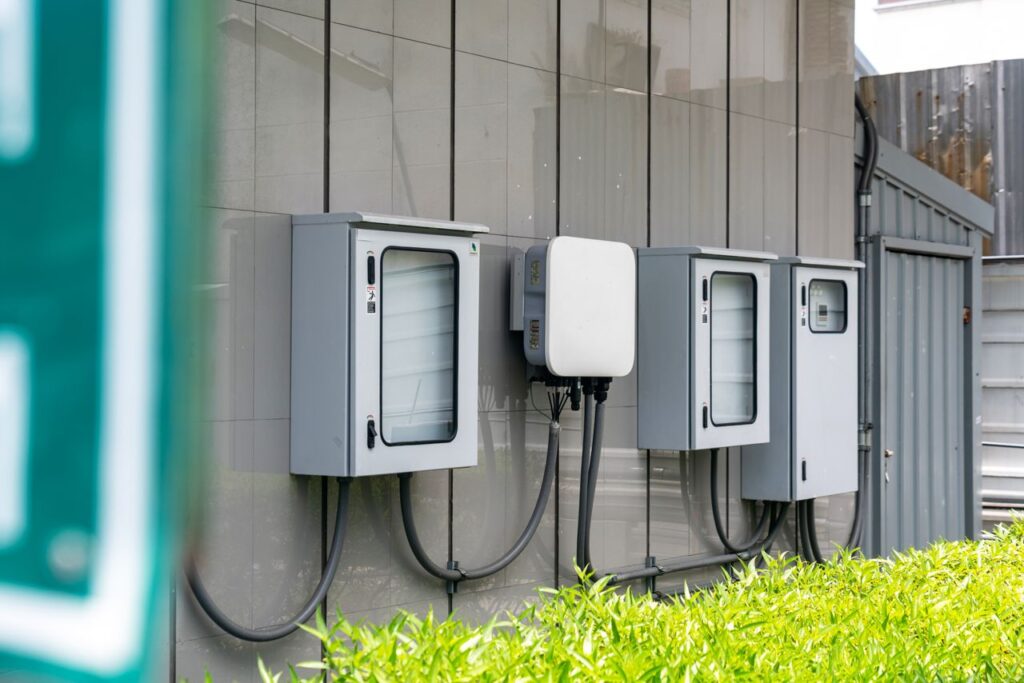
A GRP enclosure can look right in a catalog and still create problems on site. External dimensions do not establish usable mounting space, a weatherproof shell does not settle ventilation requirements, and a dispatch promise is not the same as a delivery date. The most useful manufacturer shortlist starts with the equipment and installation, rather than the cabinet’s appearance alone.
For UK procurement teams, electrical contractors, and infrastructure engineers, the eight manufacturers below offer different combinations of standard cabinets, bespoke housings, and internal fit-out. Adept GRP is our top pick for projects that need a standard cabinet range alongside custom enclosure options. Other suppliers stand out for in-house customization, installation support, electrical distribution products, or stocked formats.
This comparison evaluates published product ranges and services, not independent product testing. The ranking prioritizes suitability for outdoor electrical and utility applications, while the “Best for” descriptions help identify alternatives for more specialized work. Availability, delivery dates, and performance requirements should form part of the written quotation for the selected configuration.
At a Glance: Best GRP Enclosure Manufacturers
| Rank | Manufacturer | Best for | Useful starting point |
| 1 | Adept GRP | Standard and bespoke electrical infrastructure enclosures | VR cabinets, custom GRP enclosures, and VRS steel options |
| 2 | Pro-Tect GRP Enclosures | In-house custom cabinet builds | Tailored dimensions, environmental controls, and access options |
| 3 | Hill Grwp Ltd | Infrastructure housings with installation support | Bespoke housings, switchgear enclosures, and pump rooms |
| 4 | Fisher & Company | Low-voltage distribution cabinets | Single-door, double-door, and walk-in cabinet formats |
| 5 | Eldapoint Group | Enclosures with configurable internal fit-out | Floor, ventilation, locking, and lighting options |
| 6 | Direct GRP Solutions | Stocked standard cabinets and walk-in enclosures | Standard sizes with modifications and same-day dispatch on stock items |
| 7 | EXEL GRP Ltd | GRP and steel kiosks from one supplier | Stock enclosures, bespoke kiosks, walk-in units, and meter boxes |
| 8 | Fibaform Products | Custom housings for varied sectors | Cabinets and housings for infrastructure and other commercial applications |
How These Manufacturers Rank
The comparison favors suppliers whose products address the practical needs of outdoor equipment housing. No single manufacturer is best for every project, and a longer trading history does not guarantee a better individual cabinet.
Standard range and dimensional choice: A suitable standard enclosure can avoid unnecessary design work. Useful information includes external dimensions, clear internal space, mounting-board dimensions, door openings, and base details. A large catalog only helps when those dimensions match the equipment and maintenance requirements.
Bespoke capability matters when equipment, service entries, or site constraints do not fit a standard product. Relevant options include door arrangements, locking, ventilation, insulation, mounting plates, finishes, and internal services. Buyers should distinguish changes to an existing design from a completely custom housing.
Protection and material suitability: GRP offers corrosion resistance and useful electrical insulation properties, but material choice alone does not establish the performance of an assembled enclosure. Doors, penetrations, vents, hardware, and installation details all matter. The appropriate ingress-protection rating depends on the actual exposure and equipment.
Scope of supply can range from a shell to a fitted enclosure or a complete housing delivered and installed on site. Clear responsibility for floors, bases, electrical services, unloading, and site work makes quotations easier to compare.
Ordering and delivery arrangements deserve attention early. Stock availability can support urgent replacements, while custom projects need an agreed design and manufacturing schedule. Dispatch services are useful starting points, but the specific size, modifications, destination, and delivery arrangements still need to be agreed.
The 8 Best GRP Enclosure Manufacturers in the UK
1. Adept GRP: Best for Standard and Bespoke Electrical Infrastructure Enclosures
Adept combines a recognizable standard cabinet range with bespoke manufacturing, making it a practical first choice for buyers handling both repeat specifications and site-specific requirements.
Adept GRP manufactures GRP cabinets and enclosures in South Wales and supplies customers across the UK. Its product range includes 16 standard VR cabinet sizes, the DL range, bespoke GRP enclosures, and VRS steel kiosks. That combination gives buyers a starting point for routine electrical infrastructure work without excluding projects that need a different material or custom layout.
The company has more than 25 years of GRP manufacturing experience. Its standard GRP products are designed around IP54 protection, with IP65 upgrades available for suitable configurations. Buyers can discuss locking and ventilation requirements rather than treating every cabinet as an identical sealed box. The appropriate arrangement depends on equipment heat and access requirements, as well as the site’s exposure.
The range is relevant to utilities, electrical infrastructure, telecommunications, and renewable energy applications. A contractor replacing a damaged cabinet may prioritize a stocked standard size; an engineer working around a fixed equipment layout may need a bespoke enclosure. Adept accommodates both routes, with fast delivery available on selected stocked products rather than an assumed lead time across the whole range.
Pros
- Sixteen standard VR sizes provide a useful starting point for cabinet selection.
- Bespoke GRP products sit alongside the standard ranges.
- VRS steel kiosks offer another material option within the same portfolio.
- Locking, ventilation, and ingress-protection options support project-specific specification.
Buying considerations
Match the selected model to its actual stock status and configuration. Not every size or variant is stocked, and modifications need their own delivery agreement. For larger equipment, compare the door opening and usable internal space with the equipment installation route rather than relying only on the external dimensions.
Who it is best for: Procurement teams and contractors seeking standard and bespoke outdoor enclosures for electrical infrastructure and utility projects, with a UK manufacturing base and nationwide supply.
2. Pro-Tect GRP Enclosures: Best for In-House Custom Cabinet Builds
Pro-Tect is a strong option when a cabinet needs detailed configuration rather than a simple choice of size and color. Its cabinet offering covers compact wall-mounted enclosures through to larger floor-standing units.
The company designs and builds its GRP cabinets in-house. Customization options include ventilation, heating, insulation, cable access, mounting plates, and secure multipoint locking. These are useful distinctions for equipment that needs both environmental protection and a carefully planned internal layout.
Pro-Tect also offers standard cabinet models and dimensions, so its bespoke capability does not mean every inquiry must start from a blank drawing. Standard features include a smooth gel-coat exterior, internal mounting provision, stainless steel door hinges, and a design based on IP54 ingress protection. Increased ingress protection and other fittings are available as options.
Its cabinet materials resist corrosion, ultraviolet exposure, and chemical attack. For an aggressive environment, the sensible next step is to identify the actual exposure and specify the required construction rather than interpreting that description as universal chemical compatibility. The same principle applies to insulation and heating: their usefulness depends on the equipment and operating conditions.
Pros
- In-house design and manufacture provide a direct route for detailed customization.
- Standard cabinet formats give buyers a concrete starting point.
- Environmental-control and internal-fitting options can be specified with the shell.
- Different locking and cable-access arrangements support varied installations.
Buying considerations
A tailored cabinet needs a sufficiently detailed equipment schedule. Provide mounting dimensions, access requirements, heat output, and cable-entry positions before approving the drawing. Compare the proposed configuration with a standard model first; a standard cabinet with selected options may meet the brief without a wholly custom design.
Who it is best for: Engineers who need a GRP cabinet configured around equipment layout, environmental controls, and secure access, with design and manufacturing handled in-house.
3. Hill Grwp Ltd: Best for Infrastructure Housings With Installation Support
Hill Grwp’s scope extends beyond cabinets into larger infrastructure housings and associated site delivery. That makes it particularly relevant where the enclosure forms part of a wider plant or utility installation.
Based in Swansea, the company has a history dating to the 1980s. Its range includes bespoke GRP weatherproof housings, switchgear and substation enclosures, prepackaged sprinkler pump rooms, and TopBox roof-entry systems. It also works with steel and hybrid solutions, allowing the enclosure material to follow the project rather than a single-material catalog.
The company offers UK-wide delivery and installation. For a main contractor, that service can help clarify who is responsible for positioning and assembling the housing. It does not remove the need to agree foundations, lifting access, service connections, and the boundary between factory work and site work.
Optional provisions include lighting and HVAC, along with fire or acoustic treatments. These should be specified as part of a particular design. A fire-rated or acoustic option is not evidence that every enclosure in the range has the same tested performance, and buyers should request documentation for the construction they are actually ordering.
Pros
- Bespoke GRP, steel, and hybrid solutions cover different project needs.
- Pump rooms and switchgear housings address infrastructure-scale applications.
- Delivery and installation are available alongside manufacture.
- Optional services and treatments allow a more complete housing specification.
Buying considerations
Installation support makes the scope document especially important. Establish responsibility for the base, unloading, lifting, anchoring, services, and commissioning interfaces before placing the order. For fire or acoustic requirements, define the required performance and supporting evidence at design stage, not after the structure has been manufactured.
Who it is best for: Infrastructure owners and contractors sourcing bespoke plant housings, pump rooms, or switchgear enclosures where installation support is an important part of the purchase.
4. Fisher & Company: Best for Low-Voltage Distribution Cabinets
Fisher & Company is a useful choice for electrical contractors who want enclosure information closely connected to distribution work. Its wider portfolio includes feeder pillars, while its GRP cabinet range covers single-door and double-door cabinets as well as walk-in formats.
The company’s British-manufactured GRP cabinets protect low-voltage electrical distribution equipment up to 1,000 volts. The cabinets are designed to IP54, with higher ingress-protection ratings available by inquiry. That baseline helps buyers identify the next specification question without assuming that every application needs the highest available rating.
The construction details make the range comparatively straightforward to assess. Single-skin construction is available, while selected larger cabinets have composite construction options. The product information also identifies backboard arrangements, locking, finishes, and optional ventilation or internal electrics. Exact details vary by model, so the relevant cabinet specification should accompany the quotation.
The range extends to substantially larger walk-in cabinets alongside smaller feeder-pillar-sized housings. This matters for projects that need a consistent procurement route across several enclosure sizes. Delivery method also varies with cabinet dimensions, making access and offloading part of product selection rather than a last-minute transport question.
Pros
- Clear relevance to low-voltage electrical distribution applications.
- Single-door, double-door, and walk-in formats cover varied equipment layouts.
- Construction and mounting details support technical comparison.
- Higher IP ratings, ventilation, locking, and electrical options can be discussed.
Buying considerations
The size tables distinguish external dimensions, internal height, and backboard dimensions. Check each measurement against the equipment rather than treating them as interchangeable. Larger cabinets also have specific delivery and unloading arrangements, so include site access and lifting provision in the purchasing review.
Who it is best for: Electrical contractors and distribution engineers seeking GRP cabinet formats with detailed product information and a wider electrical infrastructure product range.
5. Eldapoint Group: Best for Configurable Internal Fit-Out
Eldapoint is worth considering when the internal arrangement is as important as the external housing. Its GRP offering spans smaller equipment shelters through to walk-in control-room formats.
The group designs and manufactures GRP enclosures for applications including electrical equipment, switchgear, communications networks, and power supplies. Its range includes different sizes and shapes, with configurations suited to buyers whose requirements do not fit a single cabinet family.
Configurable features include floor arrangements, natural or forced ventilation, locking systems, lighting, and finishes. Specifying these together can reduce the number of separate fit-out packages, provided the quotation makes clear which components are included. It also allows the designer to consider how the shell and internal services work together rather than treating accessories as later additions.
Ventilation deserves particular attention. Natural airflow may be appropriate for one equipment load, while another arrangement needs forced ventilation or a different thermal-management approach. Neither option should be selected solely because it appears in a catalog. Equipment heat output, ambient conditions, maintenance access, and ingress protection need to be considered together.
Pros
- Product formats span compact shelters and larger walk-in housings.
- Configurable floors and internal services support a more complete enclosure package.
- Natural and forced ventilation options allow different design approaches.
- Electrical and communications applications are part of the product scope.
Buying considerations
An accessory list still needs to become a finished specification. Define floor loads, equipment positions, cable routes, access, and lighting needs in the inquiry. Where powered ventilation is included, agree its controls and maintenance requirements, as well as how the completed arrangement meets the required environmental protection.
Who it is best for: Project teams purchasing a housing and coordinated internal fit-out, particularly where floors, ventilation, lighting, and access need to be specified together.
6. Direct GRP Solutions: Best for Stocked Standard Cabinets and Walk-In Enclosures
Direct GRP Solutions is a practical shortlist candidate when stocked dimensions and dispatch speed are central to the purchase. Its range extends beyond small standard cabinets.
The company offers single-door and double-door GRP cabinets, walk-in enclosures, and walk-in formats with apex roofs. Construction options include single-skin and plywood-lined versions. Modifications are also available, so the range should not be treated as an unalterable set of standard boxes.
Direct advertises same-day dispatch for stock items. That can be useful for reactive maintenance or projects with established specifications, but dispatch and arrival are different milestones. Buyers should confirm the selected model is available, whether modifications affect the dispatch date, and which delivery service applies to the destination.
The standard-range approach is attractive when the equipment schedule already fits an available footprint. Repeat orders can then use a documented model and configuration rather than reopening the design process each time. For an urgent replacement, however, matching external size is only the start: door operation, mounting position, base details, and cable access also need to work with the existing installation.
Pros
- Standard formats include cabinets and walk-in housings.
- Apex-roof walk-in options broaden the enclosure choice.
- Stock items are advertised with same-day dispatch.
- Modifications and different construction options support more than basic shell selection.
Buying considerations
Do not equate a stocked shell with a finished, ready-to-install enclosure. Confirm the complete configuration, including locks, mounting provision, vents, and any modifications. For time-sensitive work, obtain a delivery commitment that accounts for transport and offloading, not just the date the product leaves the factory.
Who it is best for: Contractors and maintenance teams whose equipment fits a standard format and who want to explore stocked availability without ruling out modifications or larger walk-in enclosures.
7. EXEL GRP Ltd: Best for GRP and Steel Kiosks From One Supplier
EXEL’s mix of materials and product formats makes it relevant to projects with several kinds of housing on the same schedule. Its offer includes standard stock enclosures alongside bespoke products.
Operating since 2018, the company supplies custom GRP and steel kiosks, meter boxes, and walk-in enclosures. It serves customers nationwide and offers online ordering for products in its range. That combination allows a straightforward purchasing route for established models while retaining a separate discussion for a custom build.
Its sectors include water, gas, energy, telecommunications, rail, and petrochemicals. Experience in those sectors helps establish relevance, but it does not by itself prove approval for a particular operator or installation. The applicable specification still needs to be stated in the inquiry and reflected in the quotation.
For mixed-material projects, the benefit is purchasing coordination rather than an assumption that GRP and steel products are interchangeable. Each housing still needs suitable dimensions, access, thermal management, and environmental protection. Comparing the materials against those requirements is more useful than selecting the same material for every asset automatically.
Pros
- GRP and steel options are available from the same business.
- Meter boxes and walk-in enclosures extend the range beyond individual cabinets.
- Standard products and bespoke designs support different purchasing routes.
- Online ordering is available for catalog purchases.
Buying considerations
Make the material and configuration explicit for each line in a mixed order. A common supplier does not mean identical installation details or maintenance requirements across products. For bespoke work, approve drawings showing door clearance and equipment space, along with service entries, before manufacturing proceeds.
Who it is best for: Buyers coordinating GRP and steel kiosks, meter boxes, or larger enclosures who value both standard purchasing and bespoke design options.
8. Fibaform Products: Best for Custom Housings Across Varied Sectors
Fibaform Products offers custom-made GRP cabinets, housings, and enclosures for a range of infrastructure and commercial uses. Its sector coverage includes rail, highways, marine, manufacturing and logistics, construction, retail, and sport.
That breadth makes it worth considering when the enclosure is part of an unusual site arrangement rather than a straightforward catalog replacement. Custom dimensions and layouts can help where a housing must work around existing equipment, restricted access, or a particular service arrangement.
Its broader molded-product offering also includes storage housings. For buyers, the useful question is which product and construction approach fits the actual application, not whether every item in the portfolio is suitable for electrical equipment. A cabinet beside a highway can have very different performance requirements from a marine-site housing or a commercial storage enclosure.
A well-prepared inquiry should therefore describe the location and operating conditions as clearly as the equipment dimensions. Specify access frequency, exposure, maintenance space, mounting requirements, and any security or fire-performance criteria. Sector experience can make a supplier relevant to the shortlist, but the proposed enclosure must still be assessed on its own specification.
Pros
- Custom-made cabinets and housings address nonstandard requirements.
- Sector coverage extends beyond conventional commercial electrical installations.
- A broader GRP product portfolio supports varied housing applications.
Buying considerations
Keep application-specific requirements explicit. A product’s suitability for one marine, rail, or highway project does not automatically establish suitability for another. Ask for a proposal tied to the equipment and its exposure, including installation constraints, with a delivery schedule for the agreed design.
Who it is best for: Project teams seeking a custom GRP housing for a site or sector where the enclosure requirements do not map neatly onto a standard cabinet purchase.
What to Include in a GRP Enclosure Inquiry
A consistent inquiry makes supplier comparisons more useful than a request for a price on an approximate cabinet size. Include the following information before seeking quotations.
Equipment and Access Dimensions
Provide equipment dimensions, mounting positions, cable-bending space, and the clear opening needed to install or replace components. Identify whether equipment is installed before delivery or fitted on site. Leave room for maintenance access and door movement, including any restrictions created by nearby fences, walls, or other cabinets.
Exposure and Environmental Requirements
Describe the location, dust, rain, spray, cleaning methods, temperature range, and equipment heat output. State any required IP rating, but do not use it as a substitute for explaining the environment. Ask how vents, cable entries, and other openings affect the performance of the final configuration.
Construction and Internal Fit-Out
Identify the required floor or base arrangement, mounting boards, locks, finishes, lighting, heating, and ventilation. Where a performance requirement applies, request evidence for the proposed construction. An option described as fire-resistant, for example, needs to be matched to the actual project requirement and relevant documentation.
Delivery and Installation Responsibilities
Separate manufacturing completion, dispatch, arrival, offloading, and installation dates. Confirm vehicle access, lifting requirements, foundation interfaces, and the party responsible for each activity. This is particularly important for larger walk-in housings, where transport and positioning can be a substantial part of the purchase.
Building-related projects may also need a review of the applicable regulatory requirements. The government’s Approved Documents guidance explains approaches to meeting building regulations in England; it is not a blanket certification for an enclosure or a substitute for the requirements applicable elsewhere in the UK.
Frequently Asked Questions About GRP Enclosures
What Is GRP, and Why Is It Used for Enclosures?
GRP stands for glass-reinforced plastic, a composite combining glass fibers with a resin matrix. It is used for equipment housings because it can provide useful strength, weather resistance, and corrosion resistance without the rust associated with unprotected steel. Its electrical insulation properties are also relevant, but the completed installation still needs an appropriate electrical design and treatment of metal components.
What Is the Difference Between IP54 and IP65?
IP54 indicates protection against dust ingress sufficient to prevent harmful deposits and protection against splashing water. IP65 indicates a dust-tight enclosure with protection against water jets. Neither rating establishes immersion protection. Select the rating for the equipment and exposure, and confirm that it applies to the enclosure as supplied, including its vents, doors, and cable-entry arrangements.
Is GRP Always Better Than Steel?
The better choice depends on the application. GRP can be attractive where corrosion resistance and an electrically insulating shell are priorities. Steel may suit other structural, security, or project requirements, with an appropriate coating and maintenance approach. Compare the complete designs rather than assuming that either material automatically delivers a particular security, fire, or weather-performance level.
Can a Standard Cabinet Be Customized?
Often, yes. Depending on the manufacturer and model, options may include locks, ventilation, mounting plates, colors, internal services, and construction changes. Ask whether the requested changes remain within a standard configuration or require bespoke manufacture. That distinction can affect drawings, cost, lead time, and the evidence supporting the finished enclosure’s performance.
Do Specialist Utility Applications Need Additional Standards?
Specialist utility applications can require additional standards. Equipment housing for a gas installation, for example, needs more than a general electrical cabinet with a different label. The GIS/PRS35 specification for GRP gas-regulator housings addresses housings for gas regulator installations and associated equipment. The responsible project team should establish the applicable specification and operator requirements before selecting a product; supplier sector experience alone is not proof of compliance.
Verdict on GRP Enclosure Manufacturers
Adept GRP is our top pick for buyers seeking a useful combination of standard cabinet sizes, bespoke GRP manufacturing, and steel kiosk options. Pro-Tect is worth comparing for detailed in-house customization, while Hill Grwp is particularly relevant when a larger housing and installation support belong in the same package.
The remaining manufacturers offer distinct starting points for distribution cabinets, coordinated fit-out, stocked formats, mixed-material kiosks, and custom sector applications. Shortlist according to the equipment and site, then compare quotations against the same configuration, delivery scope, and performance requirements. That process is more dependable than choosing on external dimensions or a headline lead time alone.